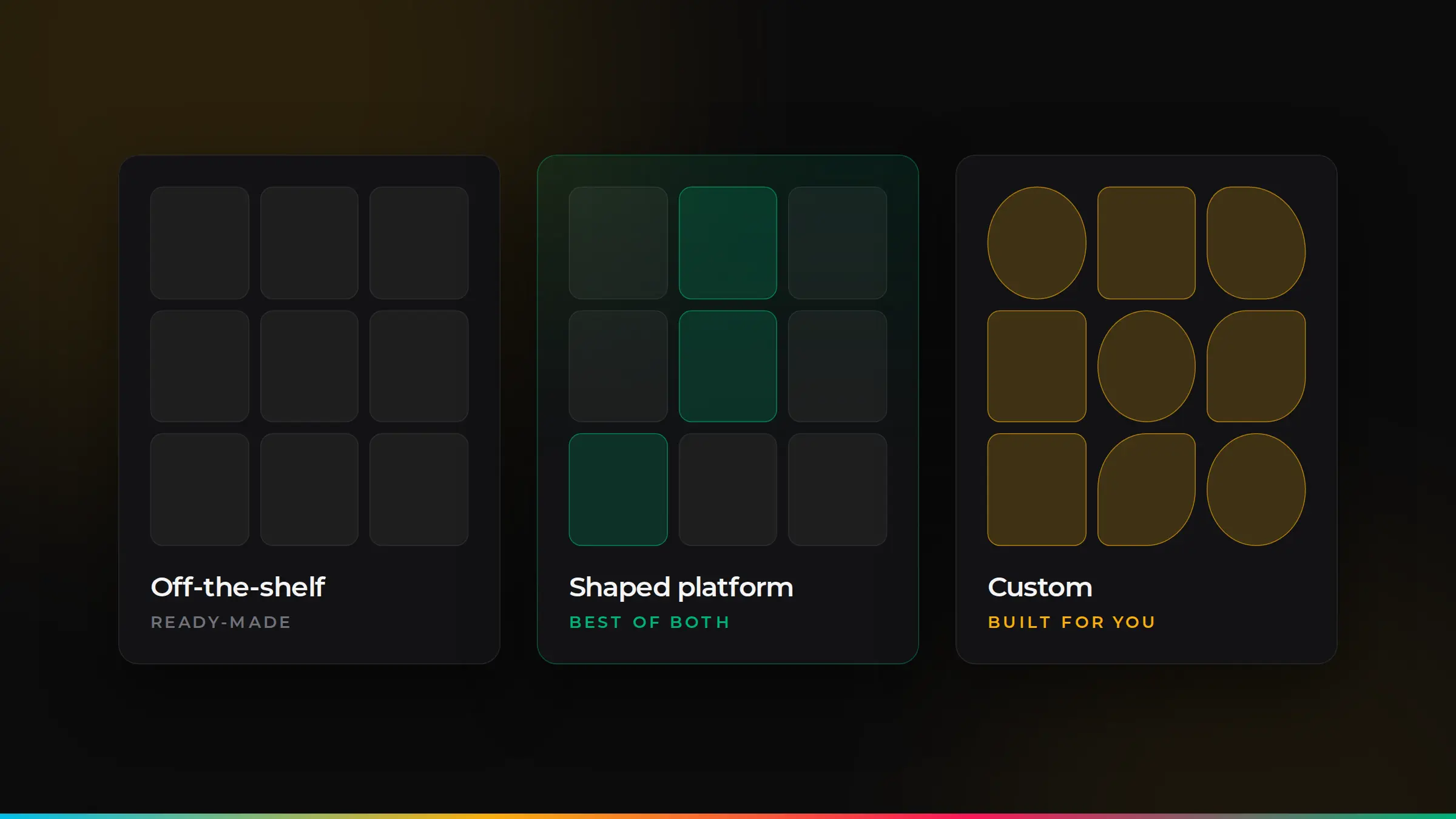
- Use off-the-shelf when your process is fairly standard and a product already does most of what you need.
- Consider custom when the way you work is what makes you different, or when you are bending your business to fit your tools.
- The middle option, an established platform shaped and connected around your business, is often the best value.
- Look at the total cost over three to five years, not just the price to start.
What is the difference?
Off-the-shelf software is a ready-made product used by many businesses, usually paid for monthly, such as accounting software, a CRM or a booking app. Custom software is designed and built for your business alone, around the way you work.
Pros and cons
| Off-the-shelf | Custom | |
|---|---|---|
| Cost to start | Low | Higher |
| Time to start | Days or weeks | Weeks or months |
| Fit with how you work | You adapt to the software | The software adapts to you |
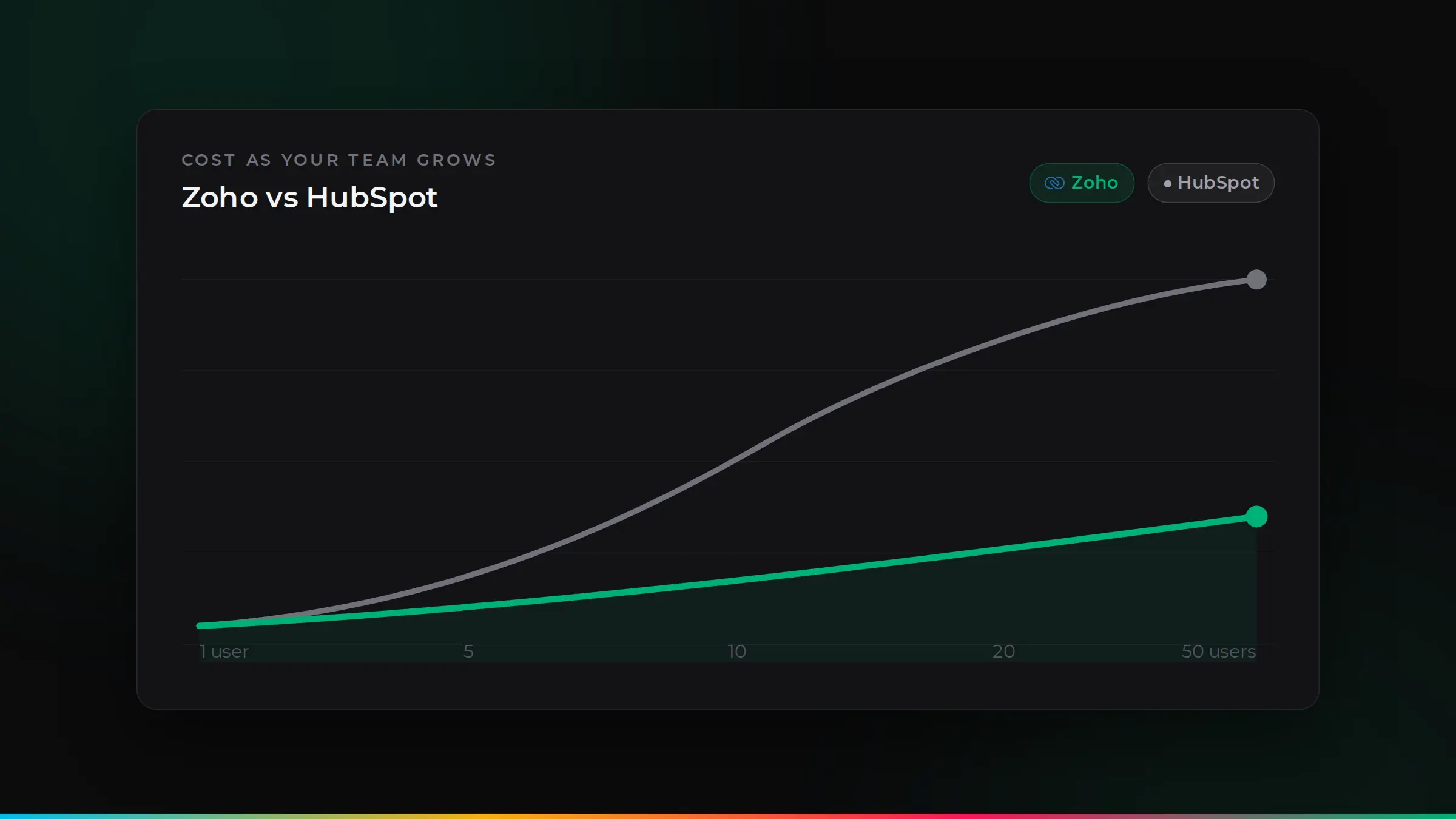
| Ongoing cost | Monthly fees per user, which grow with your team | Hosting and support, no per-user fees |
| Ownership | You rent it | You own it |
| Competitive edge | Same as everyone else | Can become part of what makes you different |
Signs you have outgrown off-the-shelf software
- Your team keeps spreadsheets “on the side” because the software cannot do what they need.
- You pay for several tools that overlap, and still copy information between them.
- Simple jobs take many clicks, or need workarounds that only one person understands.
- Per-user fees keep growing, but you only use a fraction of the features.
- You have changed how you work to suit the software, not the other way round.
When custom software makes sense
- Your process is a real part of what makes you better than competitors.
- You need several systems to work together in a way no single product offers.
- You want to offer your customers something unique, such as a portal, an app or a quoting tool.
- The time saved every day clearly outweighs the cost over a few years.
The middle option most businesses forget
You do not always have to choose one or the other. Many businesses get the best result by using an established platform for the standard parts, such as a CRM or accounting system, and then shaping it and connecting it around how they work. Platforms like Zoho can be customised a long way, and custom pieces can be added only where they make a real difference.
This usually costs less than building everything from scratch, and gives you a better fit than an out-of-the-box set-up.
Questions to ask before you decide
- What problem are we solving, and what is it costing us today?
- Does an existing product already do most of this?
- What will it cost over three to five years, including fees, support and changes?
- Who will support it, and what happens if we need changes?
- Can we start small and grow it in stages?
A quick decision checklist
Answer yes or no to each question:
- Is our process much the same as other businesses in our sector?
- Is there a product that already does at least 80% of what we need?
- Can we live with changing a few steps to fit the software?
- Do we need to start within weeks rather than months?
- Are our other tools easy to connect to it?
Mostly yes: start with off-the-shelf, or a shaped platform. Mostly no: custom software, or custom pieces on top of a platform, is worth exploring.
Examples of the middle option
- Booking and CRM together. An existing booking tool connected to your CRM, so every appointment creates or updates a customer record.
- A custom quoting tool on a platform. A quote calculator built on a low-code platform such as Zoho Creator, using your own prices and rules, feeding straight into your CRM.
- A customer portal. A secure area where customers see their orders, documents or support requests, built on top of the systems you already use.
Each of these gives you a better fit than an out-of-the-box set-up, without the cost and time of building everything from scratch.
Mistakes to avoid
- Choosing on the starting price alone.
- Building custom software for a process that is not really unique.
- Buying a product and never shaping it to how you work.
- Not agreeing who owns the software and the data.
Questions to ask a software supplier
- What problem will this solve, and how will we measure it?
- Can we start with a smaller first version?
- What will it cost to run and support each year?
- Who owns the software and the data?
- How will our team be trained, and who do we call when something goes wrong?
How ZoSwitch helps
- We are not tied to one answer: an existing product, a shaped platform, custom software or a mix.
- We look at the total cost over three to five years, not just the price to start.
- We start small and grow your system in stages.
- Ownership of what we build for you is agreed in writing before any work starts.
Got a quote from another UK agency? We will beat it.
Send us any written quote from a UK agency and we will beat it for the same work. Send us your quote.
Applies to genuine written quotes from UK-based agencies for the same scope of work, dated within the last 30 days. Excludes third-party software licences, such as Zoho subscriptions.
Talk it through with us
Book a free discovery session. We will look at your situation and give you an honest view of the best way forward.
Common questions
Is custom software more expensive than off-the-shelf?+
It costs more to start. Over several years the gap can narrow, or even reverse, because there are no growing per-user fees and it can replace several tools.
Can off-the-shelf software be customised?+
Many products can be configured, and some platforms such as Zoho can be customised and extended a long way. Connecting tools together often removes most of the frustration.
Will I own custom software?+
With a properly agreed contract, yes. You should own the software built for you. Always check this before you start.
What is low-code software?+
Low-code platforms, such as Zoho Creator, let you build custom apps faster by using ready-made building blocks, so you get a tailored tool for less than fully custom software.
Can we start with off-the-shelf and go custom later?+
Yes. Many businesses start with an existing product, learn what they really need, then add custom pieces where it makes a clear difference.

ZoSwitch is a UK team that helps businesses grow sales, save time and cut costs with the right software, websites and systems. We are a Zoho Authorised Partner. More about us.