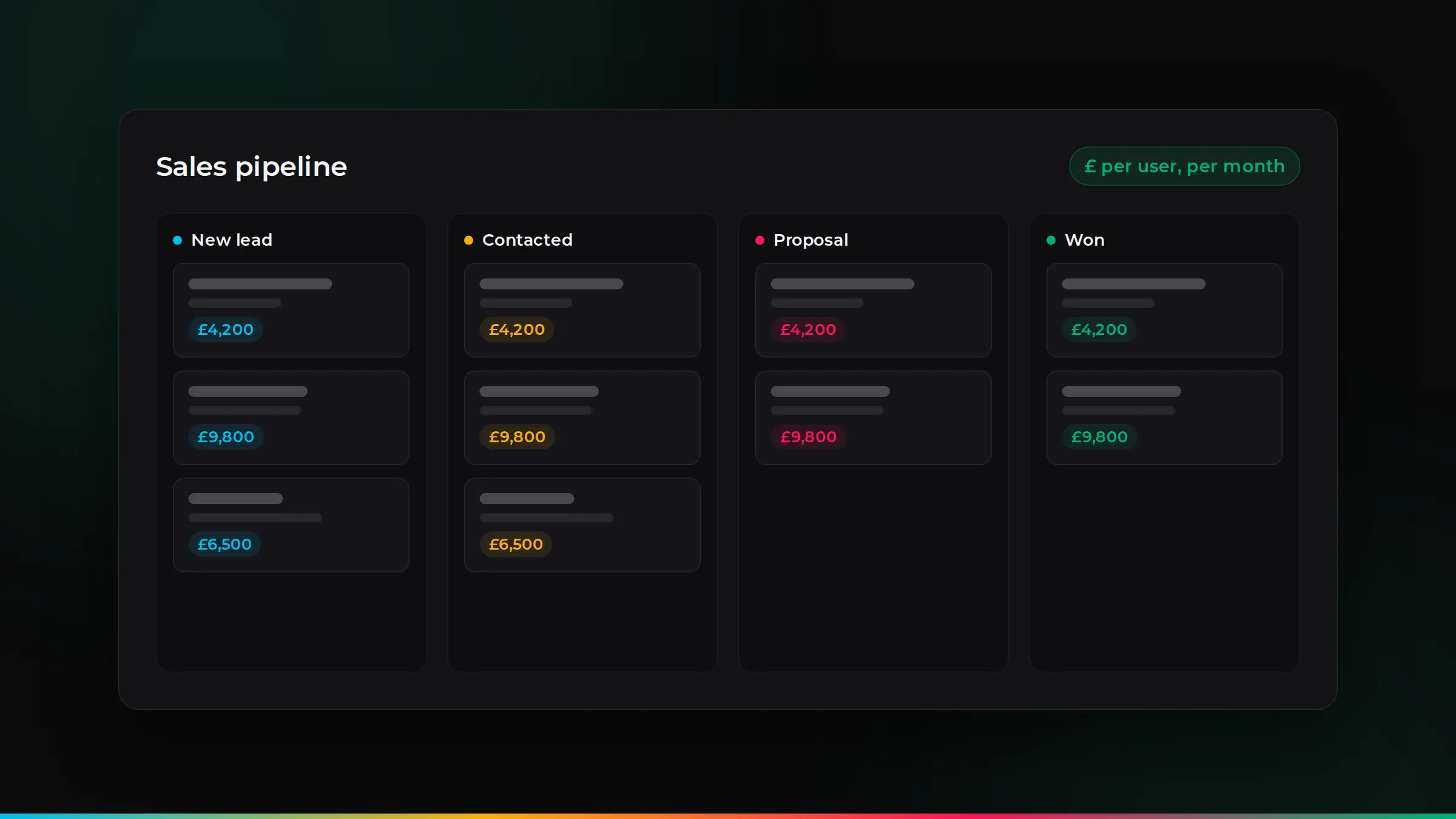
- Most CRM licences are priced per user, per month. Typical UK ranges are £10–£25 for entry plans, £25–£60 for mid-range and £60–£150+ for advanced plans.
- Set-up by a partner typically costs £1,500–£5,000 for a straightforward small business, and £5,000–£20,000+ with data migration and integrations.
- The biggest hidden cost is a CRM your team does not use. Good set-up and training matter more than the plan you pick.
- Pay yearly, buy only the users you need and review your licences every year.
The two parts of CRM cost
When you budget for a CRM, there are two separate costs to think about:
- Licences: what you pay the CRM company each month or year to use the software.
- Set-up: shaping the CRM around how you work, moving your data in, connecting your other tools and training your team. You can do this yourself or use a partner.
Typical UK licence prices in 2026
Prices change often and vary by provider, so always check current UK pricing. As a general guide, per user, per month:
| Level | Typical price per user per month | What you usually get |
|---|---|---|
| Free or entry | £0–£25 | Contacts, deals, tasks, basic pipelines and email |
| Mid-range | £25–£60 | Automation, custom fields, better reporting, more integrations |
| Advanced | £60–£150+ | Advanced automation, forecasting, AI features and deeper customisation |
For example, a team of ten on a mid-range plan at £40 per user would pay around £4,800 a year in licences.
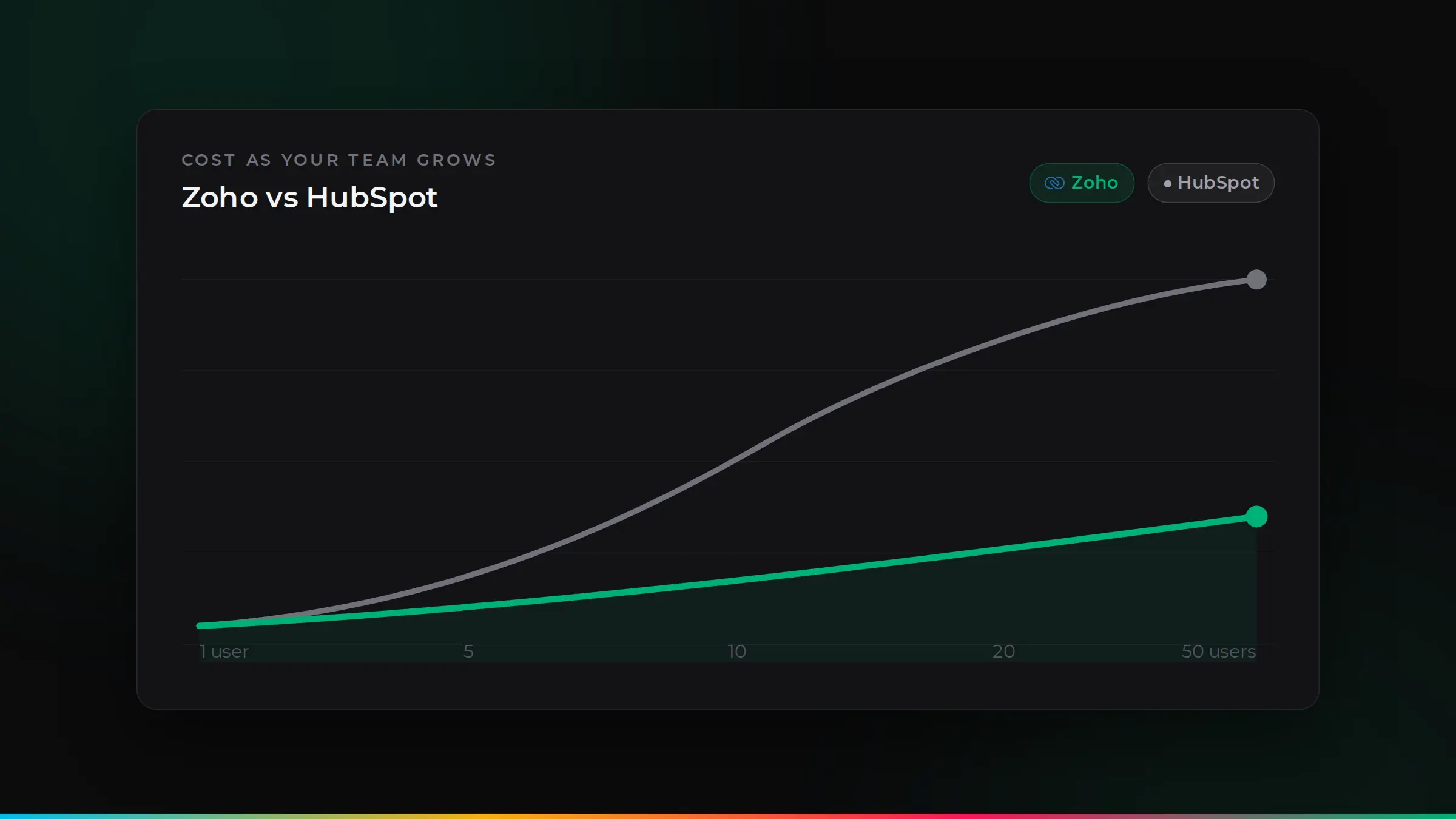
Some providers, such as Zoho, also offer bundles that include the CRM alongside accounting, support, HR and other apps for one price per user. If you need more than a CRM, a bundle can work out much cheaper than buying separate tools.
Typical set-up costs
| Type of set-up | Typical cost |
|---|---|
| Do it yourself | £0, plus your team’s time |
| Straightforward set-up by a partner, small team, basic data import | £1,500–£5,000 |
| Set-up with data migration, automation and a few integrations | £5,000–£20,000 |
| Complex set-up across several teams and systems | £20,000+ |
The hidden costs
- Low adoption. If your team finds the CRM awkward, they go back to spreadsheets and email, and you pay for software nobody uses.
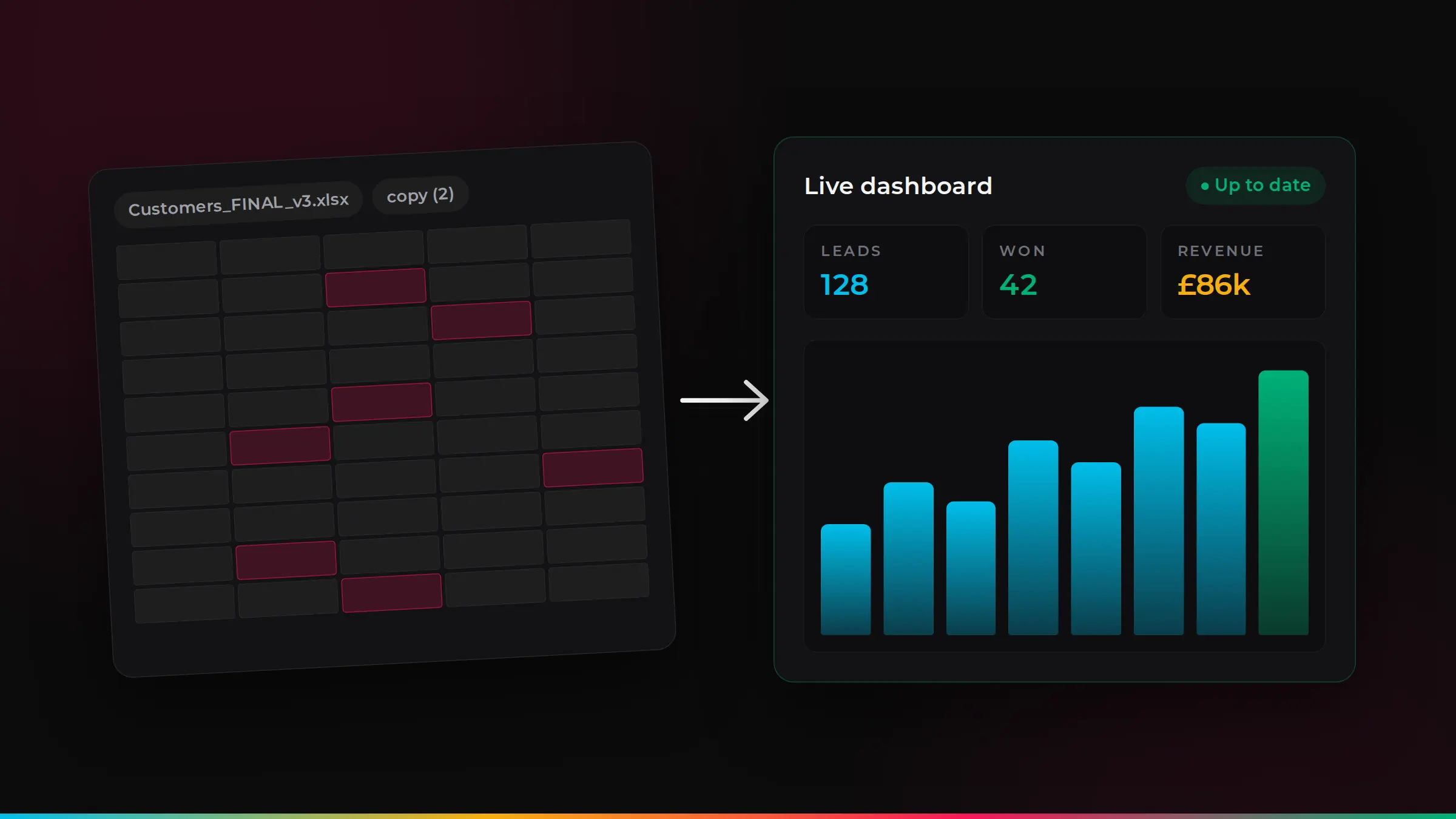
- Messy data. Importing duplicates and old records makes reports wrong from day one. Cleaning data first saves money later.
- Add-ons. Extra storage, email marketing, phone integration and advanced features can each add a monthly cost.
- Jumping tiers. Some providers keep key features, such as automation, for higher plans. Check which plan you really need before you commit.
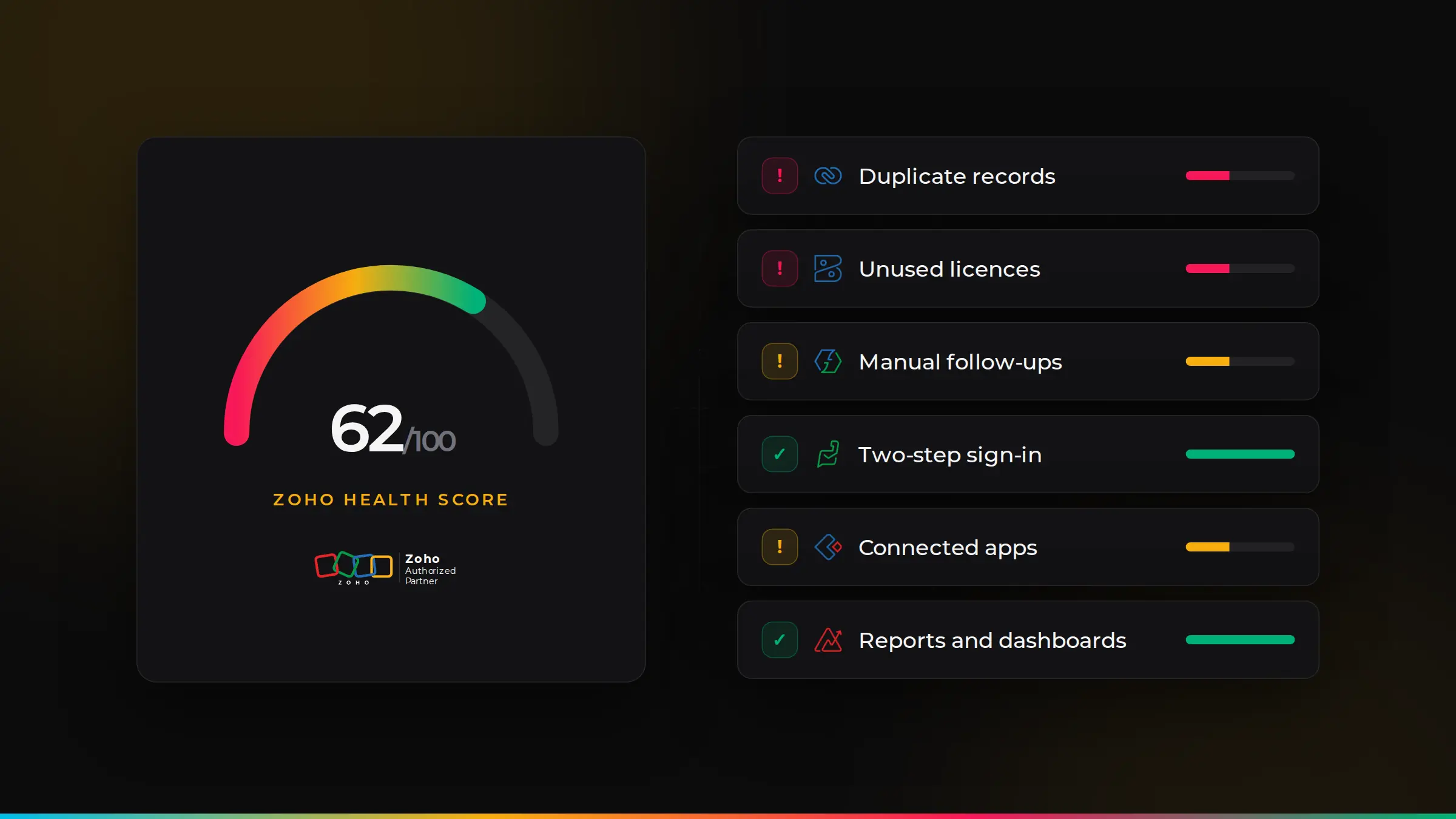
- Unused licences. Leavers and part-time users often keep a paid seat for months.
How to keep CRM costs down
- Map your process first. Know how a lead becomes a customer in your business before choosing a plan.
- Start with the users who need it. Add more as the CRM proves its value.
- Pay yearly if you are confident in your choice. It is usually cheaper than monthly.
- Automate the repetitive work. Follow-ups, reminders and data entry are where a CRM pays for itself.
- Review once a year. Remove unused licences and check you are on the right plan.
Comparing providers? Read our Zoho vs HubSpot comparison.
Example yearly budgets
To make the numbers real, here are three typical examples using the ranges above. They are illustrations, not quotes.
| Business | Licences per year | One-off set-up |
|---|---|---|
| 3 people, entry plan, simple set-up | £540–£900 | £0–£2,000 |
| 10 people, mid-range plan, data moved in, some automation | £3,000–£7,200 | £3,000–£8,000 |
| 25 people, advanced plan, several teams and integrations | £18,000–£45,000 | £10,000–£25,000 |
What a CRM can pay back
The licence is a cost. The time saved is the return. A simple example: if a CRM saves each of five salespeople three hours a week on admin and chasing, at £20 an hour, that is around £13,800 a year of time back. That is before counting the sales you stop losing because follow-ups no longer slip.
Signs you are paying too much for your CRM
- You pay for users who have left or rarely log in.
- You are on a top-tier plan but only use contacts and deals.
- You pay separately for email marketing, forms or a helpdesk that your CRM provider already offers in a bundle.
- Your team still keeps spreadsheets alongside the CRM.
- Nobody has reviewed the plan since it was first set up.
Free CRM or paid?
Free plans are a good way to start for very small teams. As you grow, you will usually want automation, custom fields, better reports and more users, which are paid features. The key is to choose a CRM you can grow into, so you do not have to move everything again later.
Questions to ask before you buy
- Which features are on each plan, and which will we need within a year?
- What does it cost to add users, storage or add-ons?
- Is there a discount for paying yearly?
- Can we export all our data if we leave?
- Where is our data stored, and does it meet UK GDPR?
- Does it connect with our email, website and accounts software?
How ZoSwitch helps
- We help you choose the right CRM and plan, so you do not pay for features or users you do not need.
- We set it up around how your team sells, so people use it every day.
- We clean and move your data safely, so your reports are right from day one.
- As a Zoho Authorised Partner, we can show you whether Zoho One or single apps works out cheaper for you.
Got a quote from another UK agency? We will beat it.
Send us any written quote from a UK agency and we will beat it for the same work. Send us your quote.
Applies to genuine written quotes from UK-based agencies for the same scope of work, dated within the last 30 days. Excludes third-party software licences, such as Zoho subscriptions.
Talk it through with us
Book a free discovery session. We will look at your situation and give you an honest view of the best way forward.
Common questions
Is there a free CRM?+
Yes. Several providers offer free plans with basic features for small teams. They are a good way to start, but most growing businesses move to a paid plan for automation and reporting.
How long does it take to set up a CRM?+
A simple set-up for a small team can take a few weeks. With data migration, automation and integrations, it usually takes one to three months.
Do we need a partner to set up a CRM?+
Not always. A partner helps you avoid common mistakes, move your data safely and get your team using it properly, which is where most of the value comes from.
Which CRM is cheapest for a small UK business?+
Several providers have free or low-cost entry plans. The cheapest over time is usually the one that fits how you work, so you do not pay for features you do not use or have to switch later.
Can we switch CRM later?+
Yes. Your data can be moved to a new CRM. It takes planning, so it is worth choosing a CRM you can grow into from the start.

ZoSwitch is a UK team that helps businesses grow sales, save time and cut costs with the right software, websites and systems. We are a Zoho Authorised Partner. More about us.